
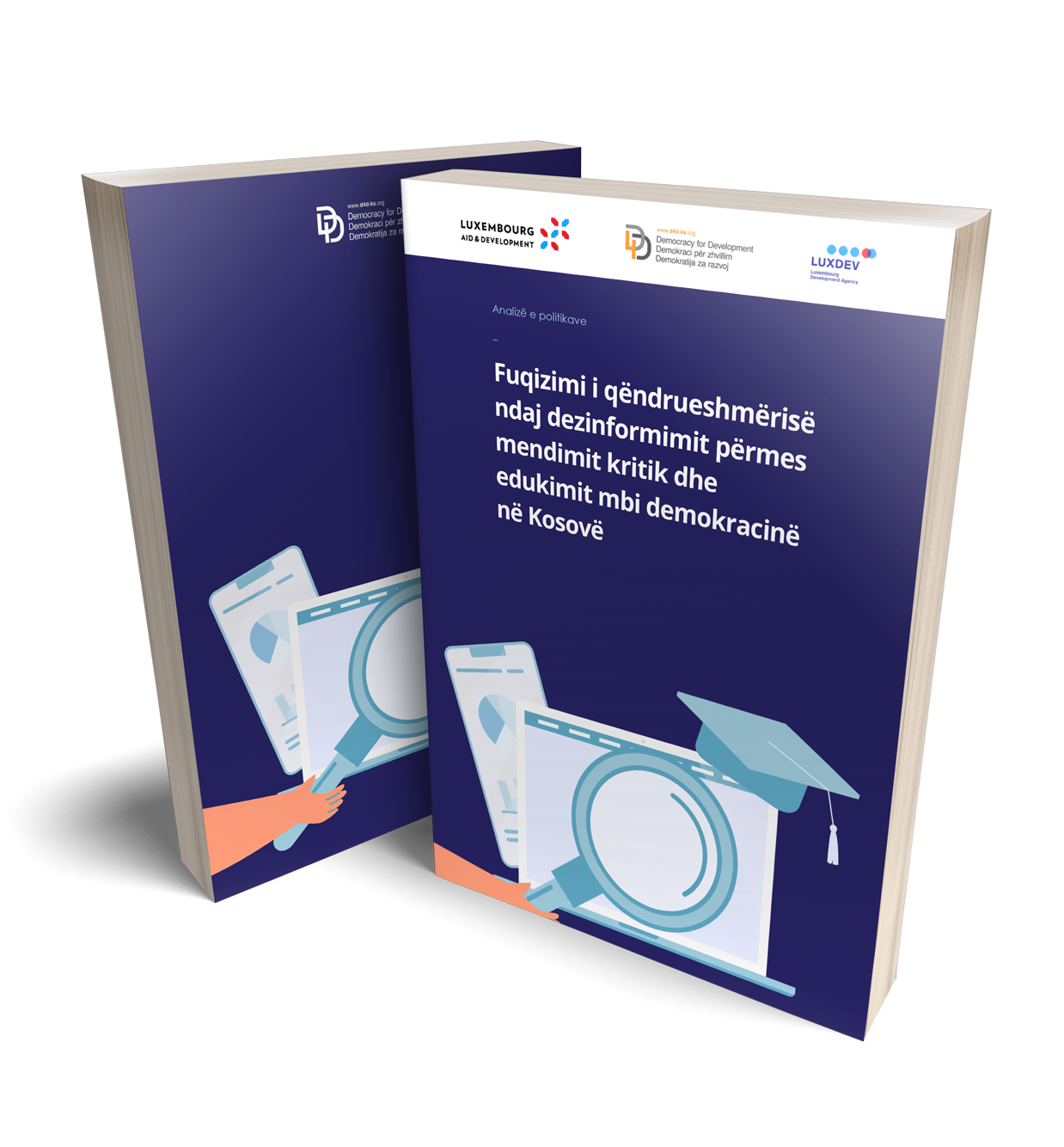
Kosovo is facing an information disorder environment in which disinformation is increasingly becoming a structural problem that undermines social well-being and democratic institutions. Current school textbooks are outdated and fail to address modern risks such as artificial intelligence (AI) and AI-generated deepfakes, social media algorithms, and crowd- or mob-driven censorship. Moreover, there is a significant gap between students’ technical skills and teachers’ pedagogical capacities to critically address these issues.
To address this challenge, this paper proposes a shift from passive teaching methods toward psychological inoculation. Drawing on the practices of the Baltic states, the objective is not only to teach students how to correct false information, but also to enable them to identify manipulation techniques before being exposed to them. The Verifiko platform developed by D4D Institute can serve as a practical tool for integrating this type of education through games, debates, and real-life case studies that can be utilized by students, parents, and teachers.
To achieve sustainable impact, the paper proposes a coordinated approach based on three pillars:
Institutionalization of the Curriculum: Media literacy education should move beyond fragmented implementation and be integrated as a compulsory subject in grades 9–12 of secondary education. Furthermore, it should be mainstreamed as a cross-curricular competency within subjects such as Albanian language, history, and Information and Communications Technology (ICT).
Capacity Building: Teachers should transition from the role of lecturer to that of facilitator through intensive training on digital ethics and AI, including the designation of one lead teacher for media literacy education in each school.
Ecosystem Engagement: Establish a structured collaborative framework between state institutions, educational institutions, parents, and civil society. This should include the development of dedicated parent-oriented modules on the shkollat.org platform and the promotion of school-based fact-checking clubs.
By 2026, Kosovo must strive to fully align its national education system with European Digital Citizenship Standards. The ultimate objective is to cultivate a resilient generation; one equipped to resist manipulation and capable of actively contributing to a healthy and transparent public sphere.
Key Objectives:
- Institutionalization: Introduction of media literacy education as a mandatory subject for grades 9–12 and as a cross-curricular competency.
- Capacity Building: Transforming teachers into facilitators of the learning process through training on digital ethics and AI.
- Collaboration: Engaging parents and civil society through the shkollat.org and verifiko.info platforms, as well as through fact-checking clubs.