
Women’s participation in politics and public life is a cornerstone of democracy and of equal representation in decision-making processes. Although Kosovo has made progress in recent years in increasing women’s representation in public institutions and political parties, women continue to face numerous challenges that limit their full and meaningful participation in political life.
The sprawl of online media and social networking platforms has created new opportunities for communication, public engagement, and access to information. At the same time, these platforms have also become spaces where personal attacks, hate speech, gender-based stereotypes, and other forms of degrading communication directed at women in public office frequently emerge. In many cases, women politicians are subjected to criticism that goes beyond scrutiny of their political positions or performance, instead focusing on their gender, physical appearance, or personal lives.
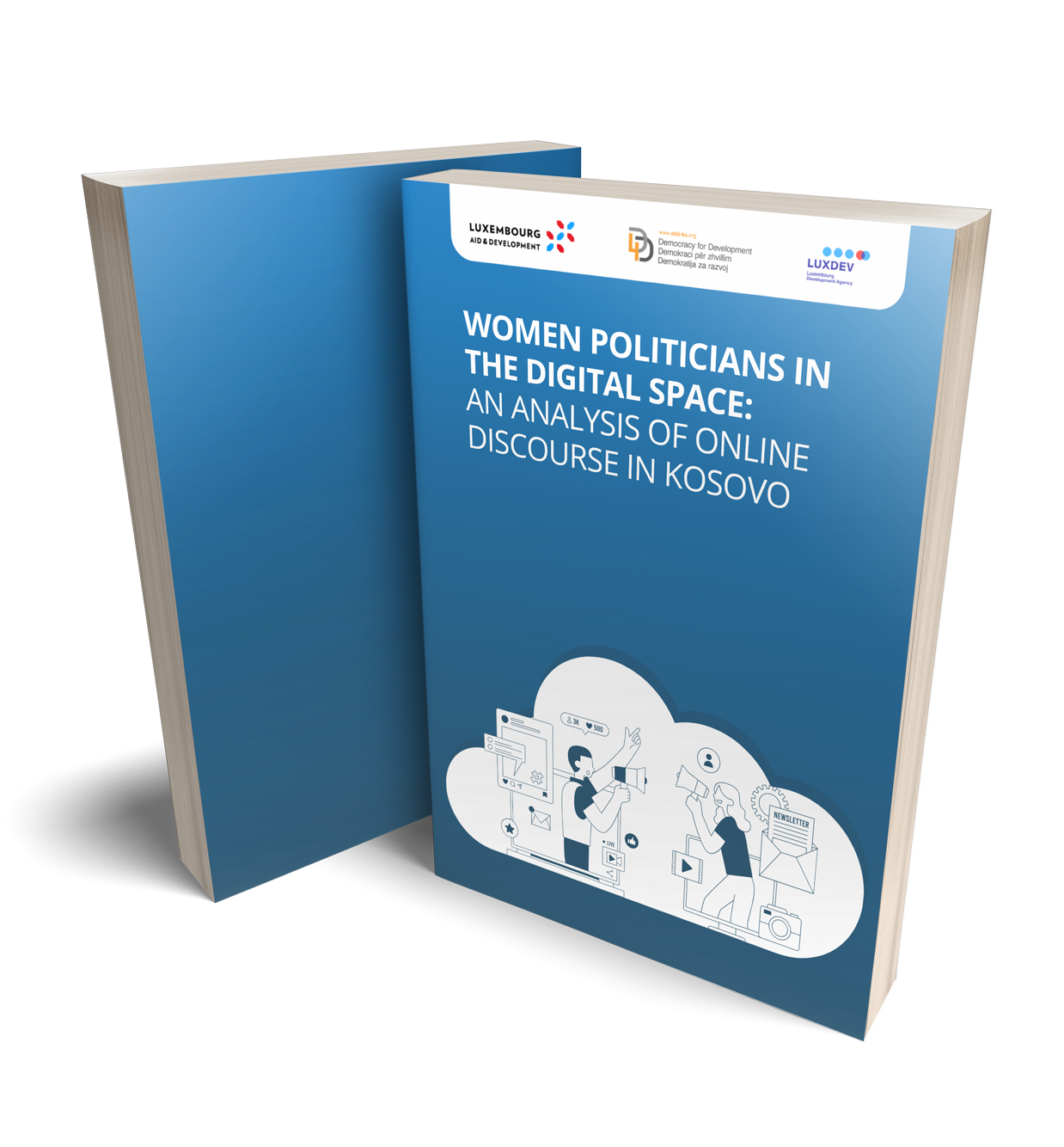
This report presents the findings of a monitoring exercise examining online discussions and media coverage of women politicians in Kosovo during the period January–April 2026. The analysis explores the extent of women politicians’ public visibility, the nature of the discussions surrounding them, and the prevalence of hate speech and other forms of degrading communication across the digital space.
By analyzing media content, social media posts, and public comments, the report seeks to identify the main trends in public discourse surrounding women in politics, highlight the most common forms of online abuse, and contribute to the broader public debate on creating a safer, more inclusive, and more equitable environment for women’s participation in political and public life.
The findings show that, although women politicians are active participants in public debate and receive substantial media attention, they continue to be the target of a significant volume of abusive comments and verbal attacks in digital spaces. These findings underscore the need for stronger engagement by public institutions, the media, political parties, digital platforms, and civil society to promote a culture of communication that respects the dignity of women and supports their equal participation in public and political life.