
Creating space, opportunities, and support for youth participation is widely recognized as a priority in public policies and official statements. However, a gap often persists between policy commitments and their implementation at national and local levels. Restricted space for youth participation is reflected in the continued exclusion of many young people from education and quality employment, their limited presence in formal political decision-making processes, and reduced opportunities for those experiencing poverty, imprisonment, or other forms of vulnerability. Lingering barriers and limited space for youth participation can have far-reaching consequences. Limited opportunities may lead to prolonged unemployment, loss of skills relevance, and a reduced contribution of young people to economic and social development. Ultimately, it may contribute to increased emigration when young people perceive limited prospects in their countries of origin.
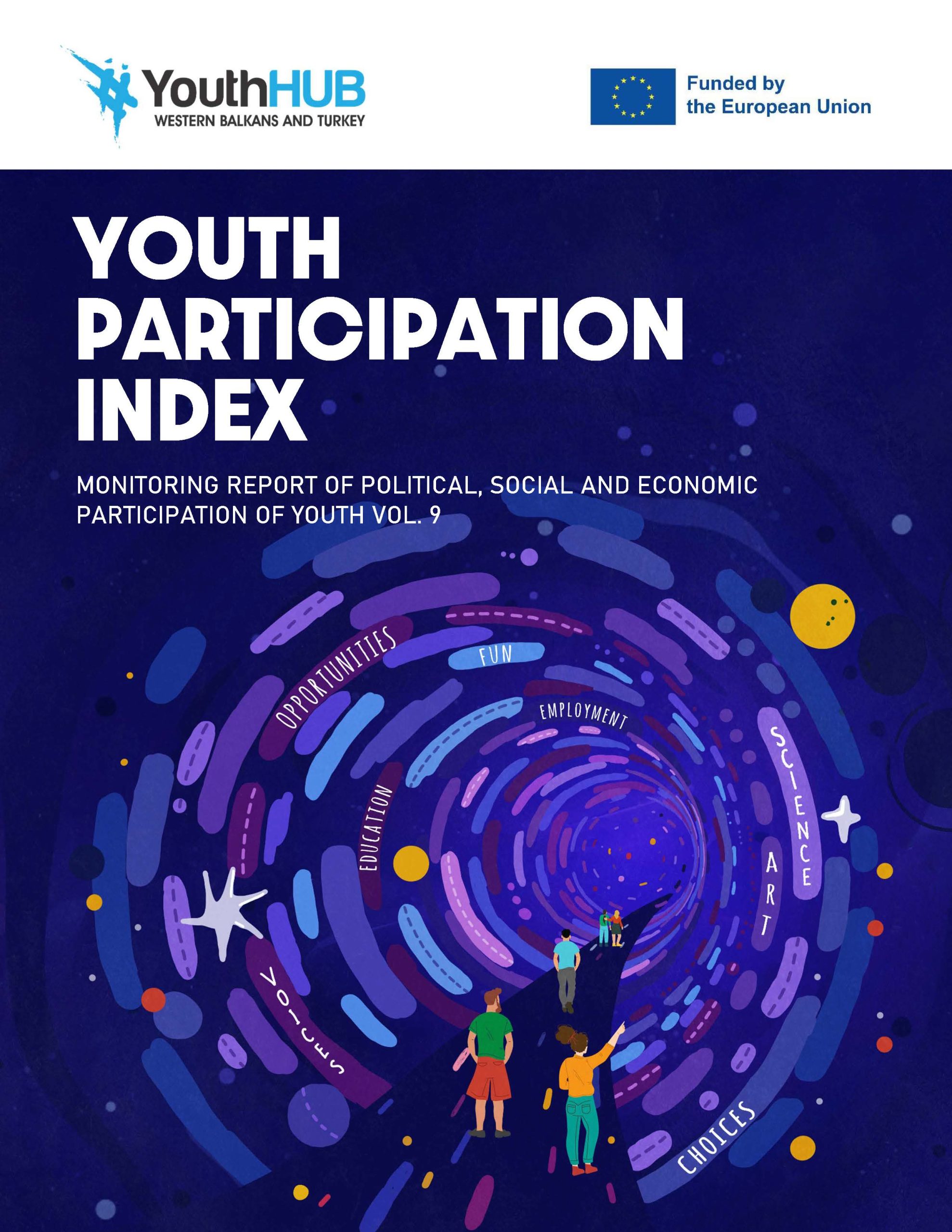
To summarize data on barriers to youth participation and provide a concrete, data-driven tool for policymakers and youth organizations, the Youth Hub for Western Balkans and Türkiye Network (YHWBT Network) developed the Youth Participation Index (YPI) 9 years ago. This index aims to provide a comprehensive overview of opportunities for youth through 25 indicators of political, economic, and social participation. The data in this index does not refer to the outcome – how frequently and in which ways young people participate, but to inputs – political, economic, and social contexts that shape youth opportunities to do so. The ninth edition of this Index includes data from Bosnia and Herzegovina and Kosovo for the second time, enabling a comparison with the previous measurement. The goal of the Index is to provide comprehensive information on the state of youth participation in the region.
Policymakers, youth organizations, and other stakeholders working on youth issues can use the Youth Participation Index (YPI) to assess the current state of youth participation and identify areas for improvement. Since its introduction in 2016, the regular development and publication of the Index have enabled systematic monitoring of trends in youth participation over time. While each participant displays its own pattern of progress and setbacks, the YPI facilitates cross-country comparisons to identify shared challenges and inform potential policy responses.
Insights from the Youth Participation Index (YPI) indicate that, although there are signs of progress over time, substantial challenges persist and the space for youth participation remains largely restricted. Persistent underrepresentation in political life, exclusion from employment and education, and a high risk of poverty continue to represent significant barriers faced by many young people in the region. At the same time, the YPI has enabled systematic tracking of progress, including improved access to previously unavailable data on youth participation (such as data on young people in prisons and those receiving financial support through social protection systems), as well as the identification of policy developments aimed at strengthening youth participation across the region. These advances demonstrate that progress is possible, but they require sustained commitment and coordinated efforts from public institutions, youth organizations, and other stakeholders. The Youth Participation Index is intended to serve as a supportive tool in this process, contributing to evidence-based policymaking and to creating opportunities, space, and support for young people’s meaningful engagement and participation
in society.