
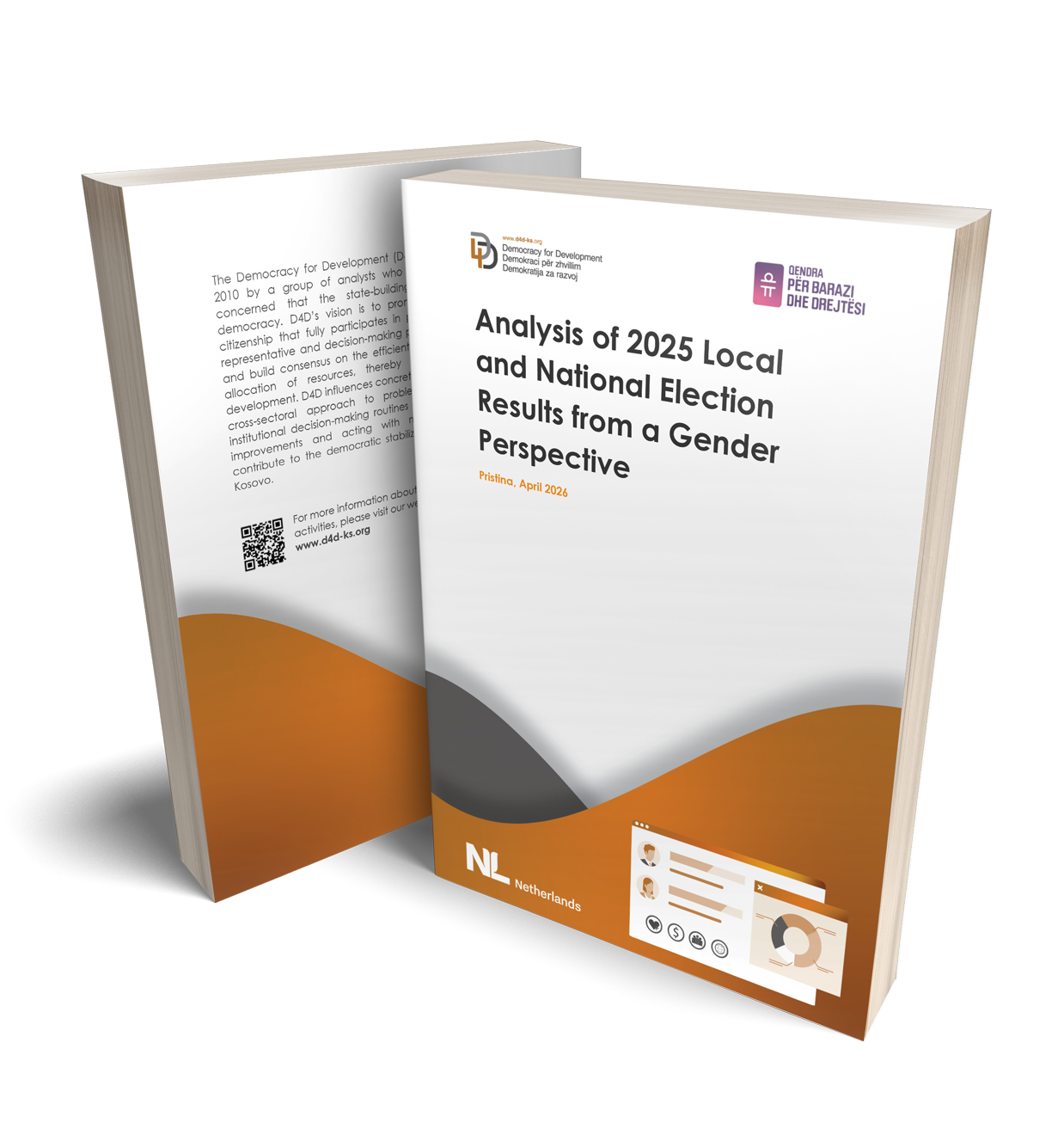
This report provides a detailed analysis of women’s inclusion and representation in the 2025 local elections and the snap elections for the Assembly of Kosovo held on December 28, 2025, through a systematic examination of all stages of the electoral process, from candidate nomination to electoral support and final representation outcomes. The purpose of the report is to identify the level of women’s participation in politics, assess the structural and institutional barriers affecting such participation, and provide a deeper understanding of gender dynamics in electoral competition.
The 2025 elections constitute a key milestone for analysis, as they include both local and parliamentary elections held within a complex political context and marked by high electoral intensity.
This context provides a valuable basis for comparing patterns of gender representation across different levels of governance and identifying the differences between them.
The report focuses on several key dimensions of gender representation: (1) women’s representation on candidate lists, (2) the role of political entities in nominating and promoting women,
(3) the electoral support women secure in comparison to men, and (4) the translation of this support into mandates and decisionmaking positions. Particular attention is also devoted to the role of
the gender quota as an institutional mechanism for balancing representation, as well as to its limitations in achieving substantive equality.
The report’s analytical approach is based on quantitative data from election results and candidate lists, interpreted through a gender perspective aimed at identifying not only the level of representation, but also the factors that shape it. In this regard, the report is not limited to describing the data but also seeks to highlight the structural patterns and political practices that influence women’s inclusion in politics.
The report’s findings contribute to the debate on gender equality in Kosovo by providing empirical evidence for policymakers, political parties, and civil society organizations, with the aim of advancing women’s participation in democratic processes and strengthening their representation in decision-making institutions.