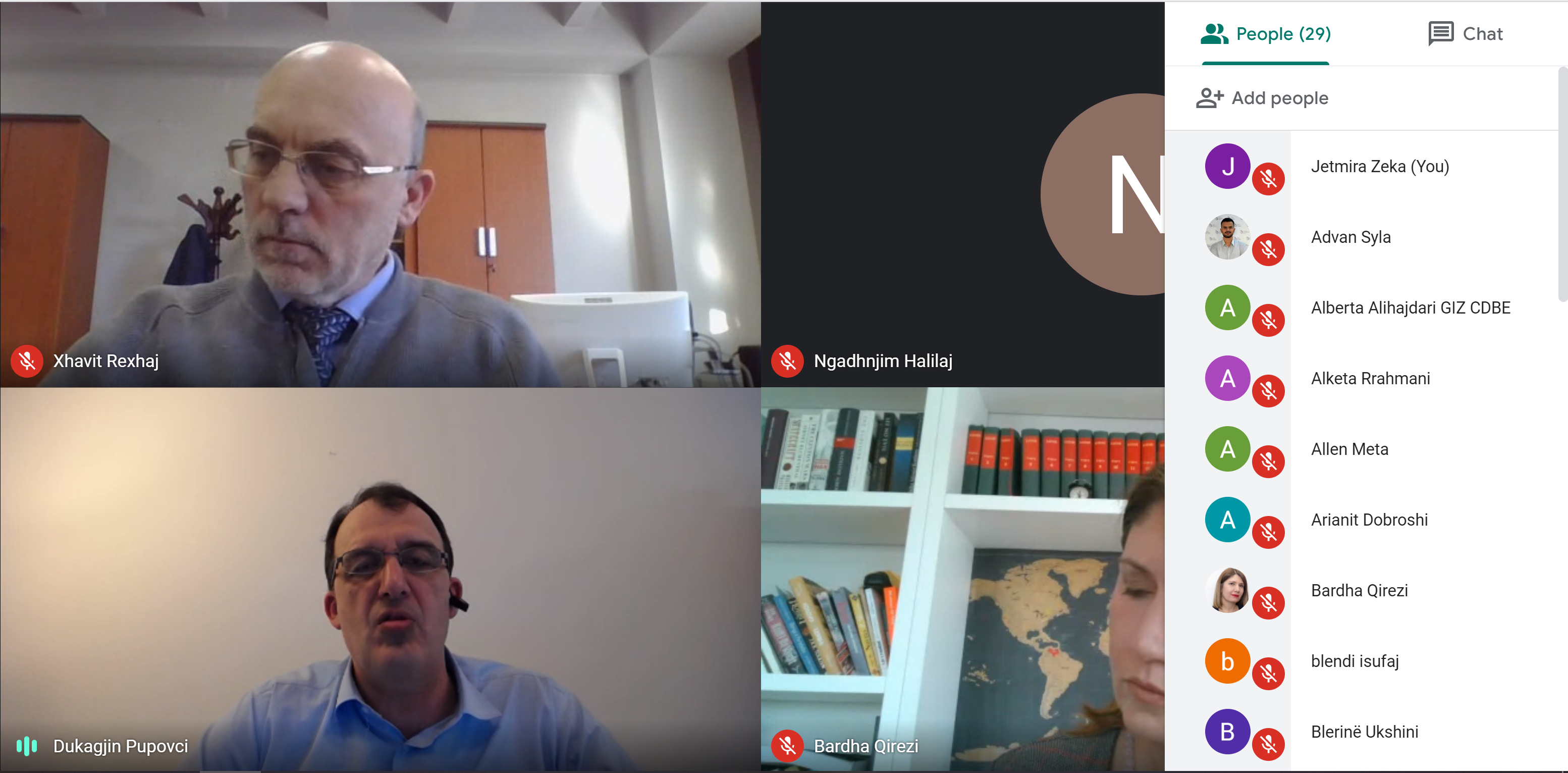

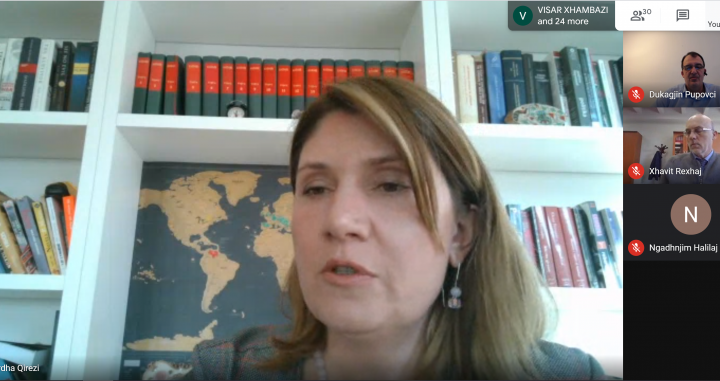
Like all countries in the world, Kosovo has not been prepared to face such a pandemic situation. In this situation, teaching has continued to be held online through various platforms and this certainly has its advantages and disadvantages. During this discussion, it was emphasized that teaching in this form is difficult to be effective if there is a lack of cooperation and interaction between teachers, students and parents. It is important to offer all conditions for schools in order to make a communication as effective as possible and to focus on providing assistance to students who do not have technological equipment and do not have access to the Internet.
During this discussion there were given some recommendations in order to have a more qualitative e-learning. These recommendations include cooperation between the level of municipal authorities and schools to better organize communication between schools, teachers, parents and students. In addition, it was emphasized that an assessment and interaction manual should be developed in order to use methods that enable children to achieve the right learning outcomes in different subjects. Also, during this Salon, it was recommended that there should be developed policies that will strengthen the technology and its use in the field of education.
How much is being provided quality on e-learning? Which online platform is most suitable for e-learning? What is the role of parents, students and the community during this situation? What will happen to children who do not have access to the Internet? These were just some of the questions that were asked and discussed during Tuesday’s Salon with the topic: “Keeping the Education System on Track: How Is the Teaching Process Being Organized during the Pandemic Crisis?”, held via Google Meet platform.
Part of the panel in this salon were: Dukagjin Pupovci, Executive Director, Kosovo Education Center (KEC) and Xhavit Rexhaj, Deputy Minister of Education, Science, Technology and Innovation. The salon was moderated by Bardha Qirezi, Rector, Riinvest College.
This salon was supported by Friedrich Ebert Stiftung, Prishtina Office and Kosovo Foundation for Open Society (KFOS).