
We are continuing our series with the second release of monitoring data from Democracy for Development (D4D) for 2026, comparing two periods to show how online hate speech against women is changing forms and tactics.
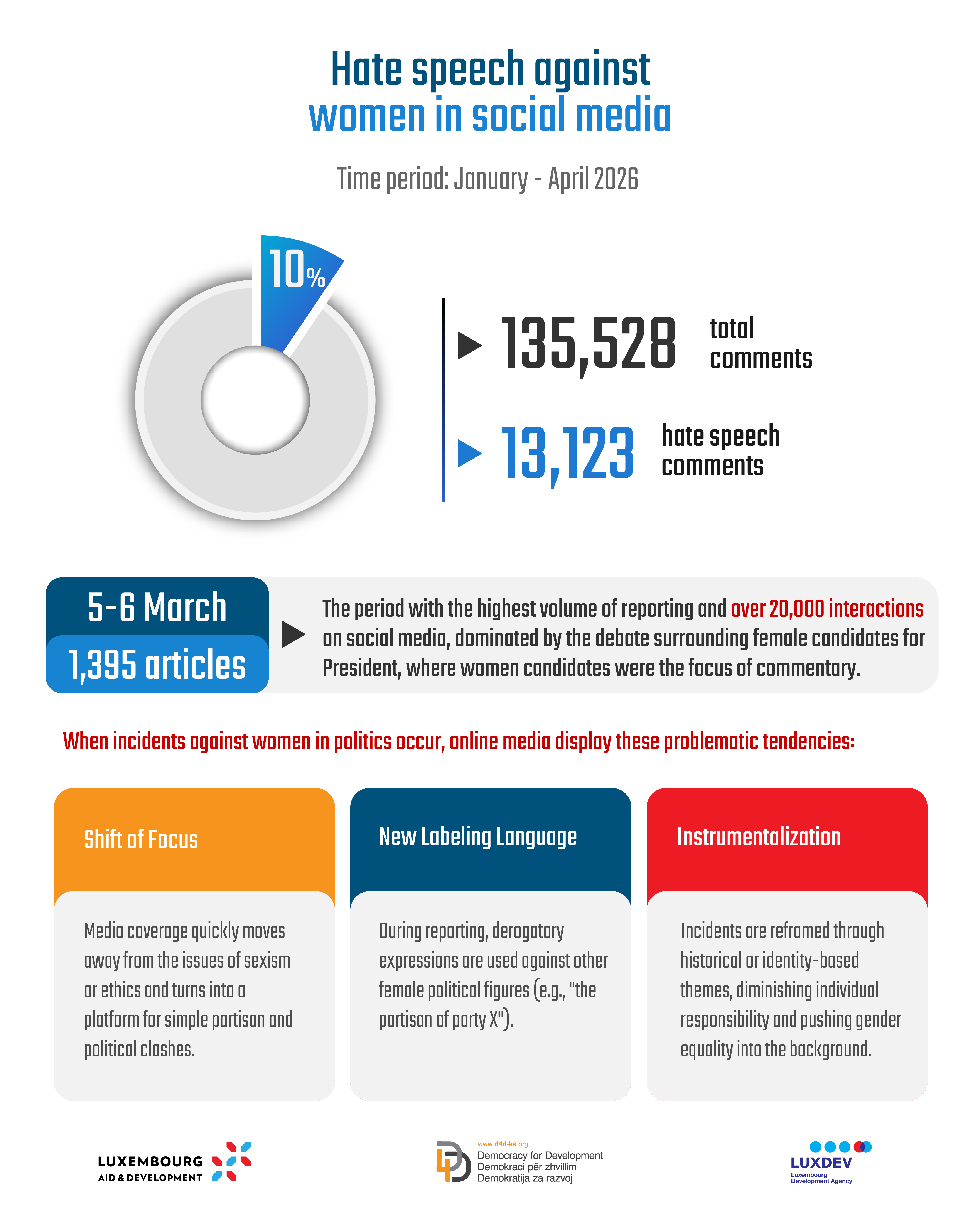
Period III (January – April 2026): Out of 135,528 analyzed comments, 10% (13,123) contained hate speech. The peak of abuse occurred during the debate on presidential candidates, generating over 20,000 interactions. During this stage, online hate was directly fueled by media framing that shifted attention away from sexism toward party clashes, using identity issues and labels like “partisan of Party X” to undermine gender equality.
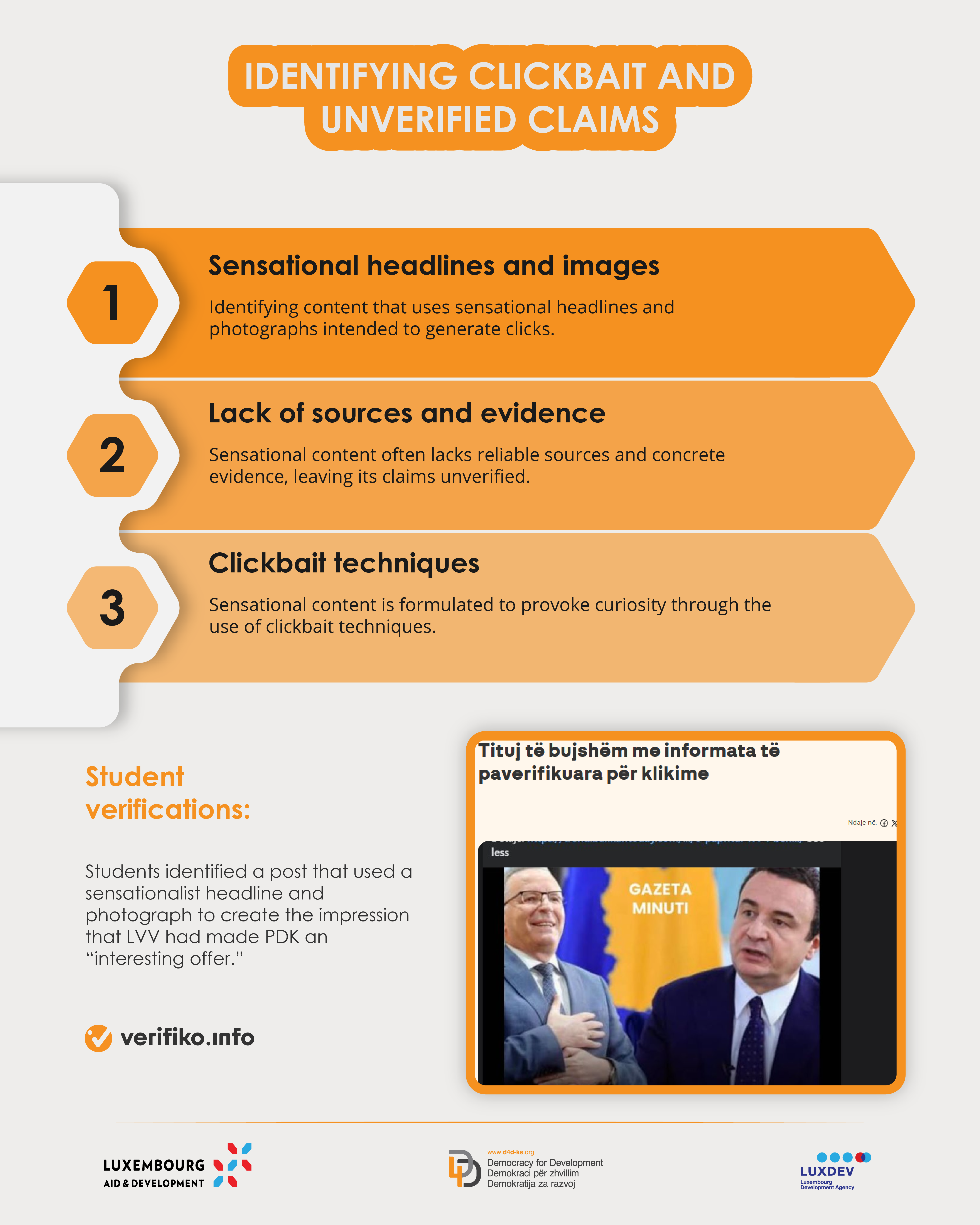
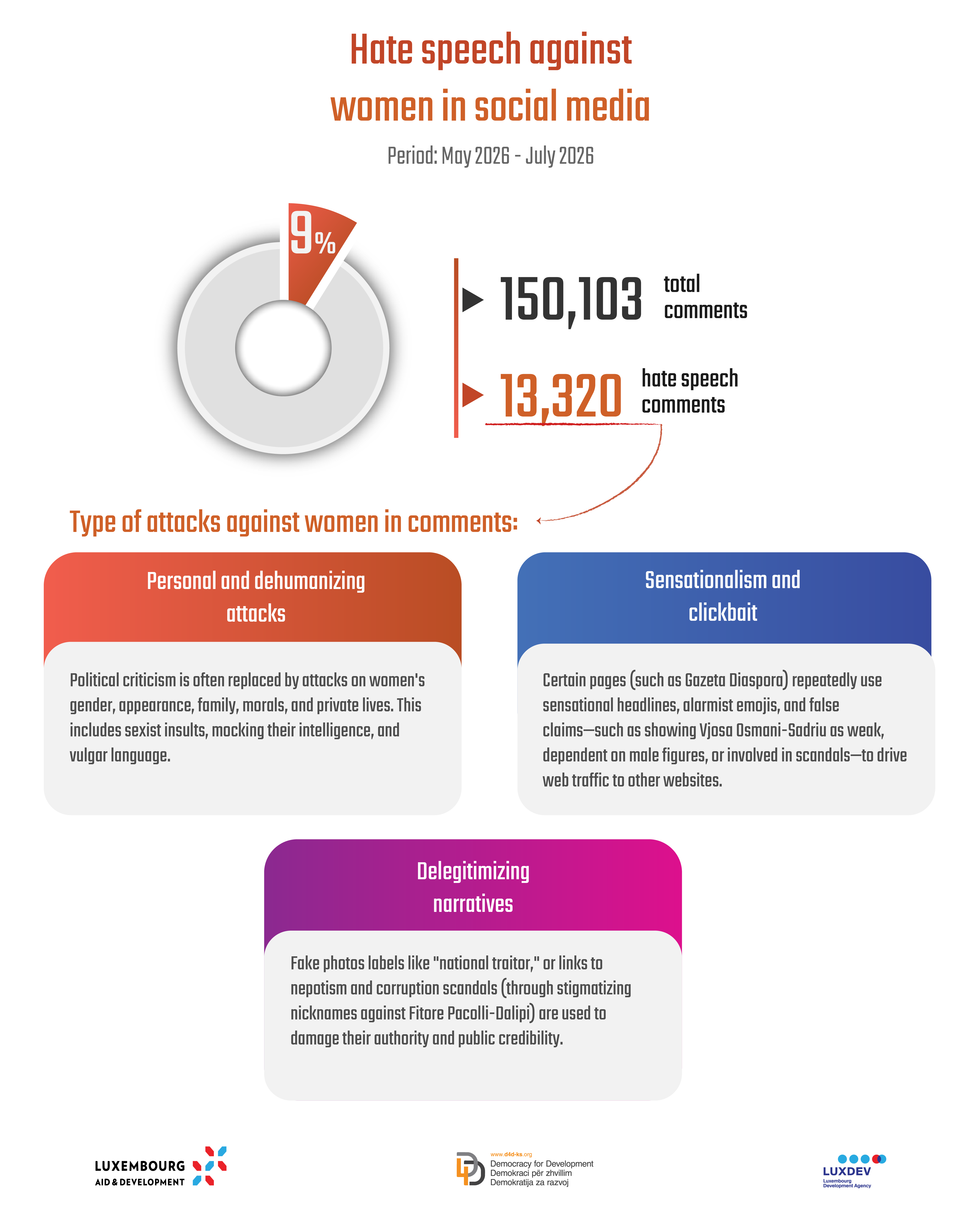
Period IV (May – July 2026): Out of 150,103 total comments, the hate speech rate remained nearly constant at 9% (13,320 comments), but tactics evolved from political fights to direct personal attacks and clickbait. Political criticism was replaced by dehumanizing attacks on women’s morality, family, and appearance, insulting photo manipulations labeled “national traitor,” and sensational clickbait used by certain pages to drive traffic by damaging women’s public authority.
The monitoring during this period was carried out with the support of the “Support to civil society in Kosovo” project, funded by the Grand Duchy of Luxembourg and implemented by LuxDev, Luxembourg Development Cooperation Agency