
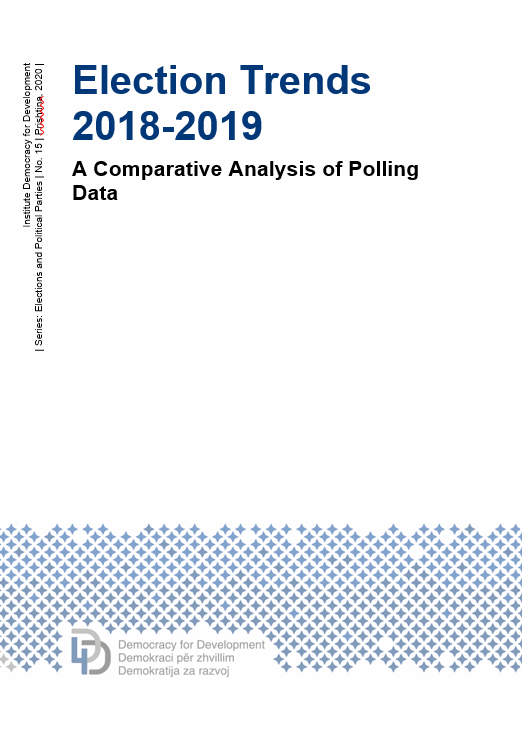
This study gives an overview of ‘systematic observation’ of election trends in Kosovo. It does so by comparing data from two national survey polls conducted in 2019 and 2018. Both these surveys were conducted after the national elections held in June 2017, and before the elections held in October 2019. Therefore, it is important to highlight that questions and answers concerning election results relate to only the 2017 elections as the main source of reference in order to understand how people’s opinions, perceptions and behavior has changed in the last two years.
The trends observed in this analysis are compared in three aspects: how voters are informed, to what extent people trust the current voting system, and when and how people decide to vote. Finally, the polling data is interpreted by D4D as in the following outline based on the meaning put on the data collected, analyzed and compared:
- People choose television (TV) as the main source of their information. Internet comes second but it is viewed as important. The polling data, however, does not show any significant change or trend in the last two years whether people use or choose other means of information. Such polling data also confirms that conventional methods used for information (e.g. radio, newspaper, etc.) are almost useless. The information that people seek to receive tend to relate to their immediate interests, largely concerning employment and economic development issues as indicated in the most recent polling data.
- People feel more comfortable with the current electoral system. Voters are increasingly more confident about the impact of their vote in decision-making by an increase of about 11%! The data on to whether there should be a single electorate system and gender quota has slightly changed. Although such changes are not statistically important, they clearly illustrate a trend that is in support of a single or one-zone electorate system and 30% gender quota. As the research findings indicate, there is about 6% increase of response rate in favor of the single electoral system and 7% increase in favor of the 30% quota.
- People feel slightly less exposed to party influence in their decision who to vote for. There is an increase by almost 10% of those who would cast their vote for a particular candidate based on their own decision, not necessarily based on the recommendations of the political party. Greater individual autonomy in the political process seem to also suggest that people do not feel close to the political party of their preference and nor do they see any point of making a contact with their representatives including Members of the Parliament, Municipal Councilors and the Mayor.